
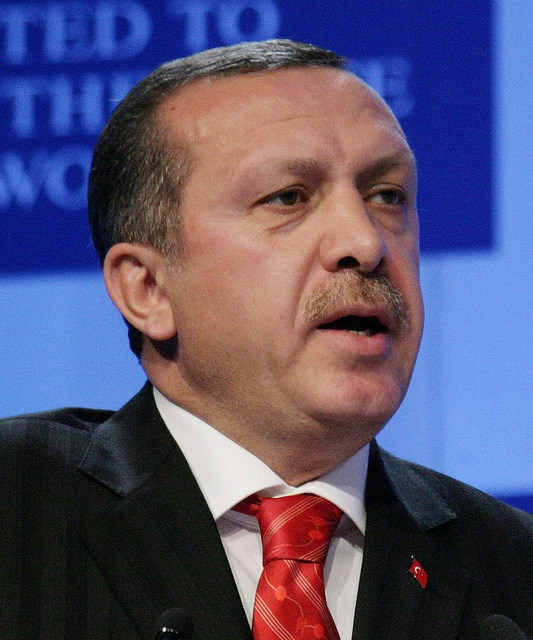
In May of 2013 the last green area in Istanbul, Turkey, was to be torn down for the creation of additional businesses in the city. Gezi Park became a symbol for the people of the city, and protestors began to gather. Soon Taksim Square was filled with the city’s residents. Under the orders of President Tayyip Erdogan, the police responded with tear gas, rubber bullets, and water cannons. Eleven people were killed and 8,000 injured, some critically. On June 1st the police adopted a contain policy and the violence ended. The protestors were finally removed by riot police on June 15th.
Was the reason for this protest the park alone, or were there underlying causes?
Erdogan is a Muslim extremist. After his election he began to institute forms of Sharia law. Public expression of affection was forbidden, and a form of prohibition was established. Freedom of speech was limited as well as television broadcasts, the use of the internet, and freedom of the press.
The protestors were composed of every Turkish walk of life, both right and left, poor and affluent.
Erdogan was reelected in 2014. The results were criticized worldwide. His AKP party controlled the media and accusations of a biased election were rampant.
Turkey’s population is predominately Muslim. Sunnis compose approximately 72 percent of the population and Shiites 25 percent. The remainder are Christians and Jews. A survey of the nation’s people revealed that 23% of Turks are religious, 73% are irreligious and 2% are Atheists. The people of Turkey have been progressive, and have lived in a peaceful coalition for many years. Recent events threaten the lifestyles of all of its citizens and create the possibility of a full revolution.
Today Erdogan and his AKP party have regained complete control of Turkey in a general election. The Kurds, who have been ostracized by the President and his party will likely suffer additional sanctions. It is unlikely that the AKP and its opposition the CHP will form a coalition.
Protests began immediately after election results were posted. Thousands of Turkish citizens remain imprisoned after the last protests against Erdogan and his extremist policies.
Will the people band together in an uprising against what has become a Totalitarian regime? It is possible, but if Turkey’s economy remains relatively stable it may not be forthcoming.
Turkey is a member of NATO, and considered an ally of the United States. However, certain factions within the nation, and the extremist views of Erdogan himself seem to clear a way for terrorist groups such as ISIS to join in an effort to dominate the nation’s diverse people.
Erdogan’s view of Islam is ISIS’ view. He seeks to remove any and all democratic action by the nation’s media, courts, and those who demand individual rights. Can this nation, which borders on Assad’s Syria, devolve into another Mideast civil war? I believe that it may be imminent. I reported on the events in Taksim Square for months. The people of Turkey are not dissimilar to those in our own nation. They believe in many of the same principles which our founding fathers included in our Declaration of Independence and the law of the land; the Constitution.
The United States desperately needs Turkey. Its position and status in the region are paramount to American interests. This may become the next conflict our government will declare that military involvement is inevitable.
Op-Ed
By James Turnage
Photo Courtesy of Global Panorama
Author’s Page http://www.amazon.com/By-James-turnage/e/B00LOCJ2Z2
 The Truth With No Restrictions
One thought on “Turkey Could be the next Syria”