
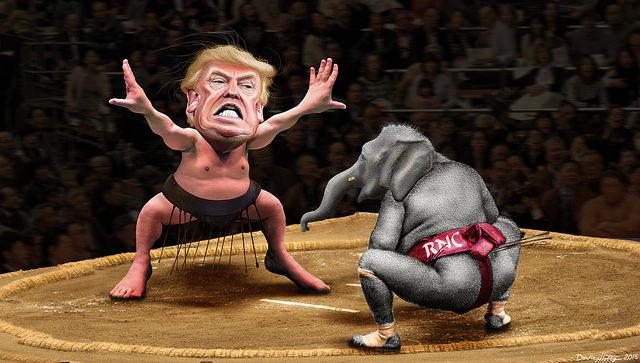
The 2016 campaign season fully began in August of 2015. There were 17 presidential hopefuls participating in two separate and unequal debates on August 6th. After the debacle ended, and the polls revealed that only five of the 17 received double digit numbers, none of the presidential wannabees suspended their campaigns.
Finally, on September 11, 2015, Rick Perry became the first to admit the futility of his candidacy. Trump’s momentum continued to grow.
On September 21st, Scott Walker resigned. Walker was a TEA Party and GOP favorite, but his numbers never rose, forcing him to suspend his campaign.
On November 17th New Orleans Governor Bobby Jindal ended his campaign citing low poll numbers and a lack of fundraising. Trump’s numbers were far greater than his competitor’s.
Lindsey Graham joined the others on December 21st; thirteen hopefuls remained.
Slowly the others suspended their campaigns; most never received ten percent in the polls.
Jeb Bush, the Republican establishment’s favorite son, ended his quest for the White House on February 20, 2016, as his numbers failed to reach ten-percent.
The last to suspend his campaign was Marco Rubio on March 14th, after a 20-point loss to Donald Trump in his home state of Florida. Trump remained in control as the party’s last hope was crushed.
In a desperate and humiliating decision, the party elite chose to support the candidacy of Ted Cruz in an effort to destroy Donald Trump’s hope of receiving 1,237 delegates; the number needed to win the nomination before July’s convention.
If the 13 candidates whose numbers proved that they could not win would have ended their campaigns before the end of 2015, a concerted effort to support Marco Rubio could have cost Trump victories in the primaries. Whether it was ego, or an effort to further future political ambitions, remaining in the race, without any hope of victory, handed Trump additional delegates.
Once again, failed Republican leadership strengthened “Trumpenstein.” Now that he is guaranteed to win the greater number of delegates before July, there is but a single option; a contested convention.
During the convention, a number expected to be 122 delegates, will choose the party’s nominee. Republican voters will be denied their right to select their party’s representative in November. This will prove to be the most divisive effort by the establishment to date.
Twelve of the thirteen Republican debates were no more than schoolyard brawls. Accusations, personal attacks, and lies fill the auditoriums, while issues were ignored.
No one in Republican leadership stepped up and suggested that a candidate who ran on the issues could defeat Trump. That takes us to the situation the party is in today. Ignorance and the exclusion of the desires of voters by the establishment have advanced Trump far beyond what was necessary; he could have been beaten, if the party had organized behind one candidate months ago; now it’s too late.
The lack of logic from the RNC is appalling to me. After promising Republican voters that the party would change when they lost in 2012, it failed to keep those promises; and the voters remembered. A vote for Donald Trump is a vote against the establishment, and not necessarily a vote for him.
Op-Ed
By James Turnage
Photo Courtesy of DonkeyHotey
Novels from James Turnage Available on Amazon’s Kindle
 The Truth With No Restrictions